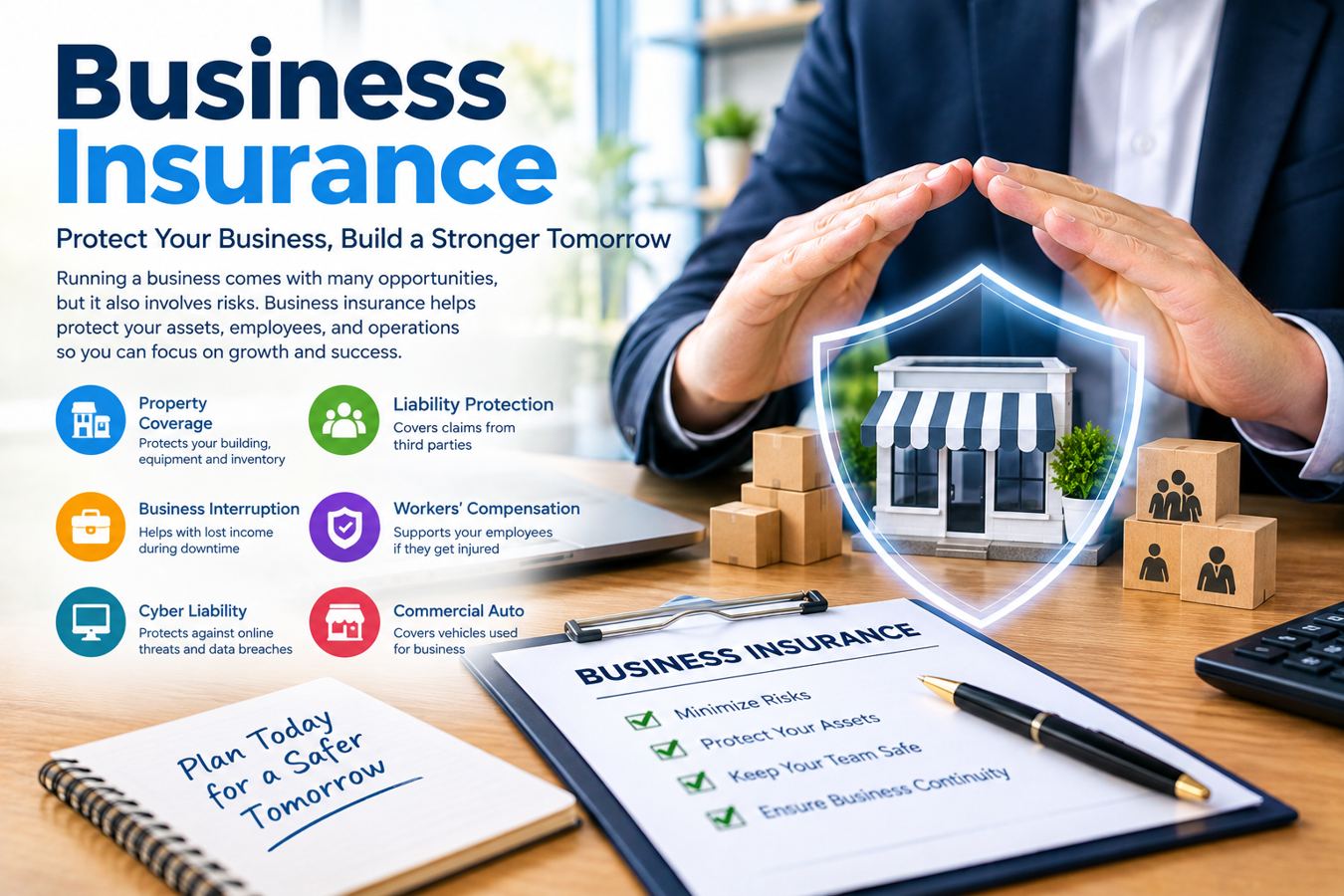
Running a business involves opportunity, investment, and hard work, but it also comes with risks. A fire, property damage, customer injury, employee accident, lawsuit, equipment failure, or unexpected interruption can create financial pressure for a company. Business insurance is designed to help businesses manage certain risks and protect their financial interests when covered events occur.
Whether you operate a small shop, an online business, a professional service, or a larger company, insurance can be an important part of a broader risk-management strategy. The right coverage depends on the type of business, its location, employees, property, customers, vehicles, and the risks associated with its daily operations.
What Is Business Insurance?
Business insurance is a collection of insurance products designed to protect companies against different types of financial risks. Unlike a single policy that covers everything, businesses may use several types of coverage based on their individual needs.
A policy may help cover certain property losses, liability claims, business interruptions, employee-related risks, or other covered events. However, coverage differs between insurers and policies.
Before purchasing business insurance, owners should understand the policy’s limits, exclusions, deductibles, conditions, and claim procedures.
Protecting Business Property
Many businesses depend on physical assets such as buildings, equipment, computers, furniture, tools, inventory, and other supplies.
Property insurance can help protect eligible business property against certain covered events. For example, depending on the policy, damage caused by fire, theft, storms, or other specified risks may be covered.
The appropriate coverage amount should reflect the value of the assets that would need to be repaired or replaced after a covered loss.
Business owners should also maintain an updated inventory of important equipment and property. Keeping receipts, photographs, serial numbers, and purchase records can make documentation easier if a claim occurs.
Business Liability Insurance
Liability is another important area of business risk.
A customer, visitor, supplier, or another third party could potentially claim that the business caused injury, property damage, or another covered loss. Depending on the circumstances and policy, liability insurance may help with eligible legal costs, settlements, or judgments.
For example, a customer could slip inside a business location and suffer an injury. If the business is legally responsible and the claim falls within the policy’s coverage, liability insurance may help manage certain associated costs.
The exact protection depends on the policy and applicable laws.
Business Interruption Coverage
Sometimes a business can suffer financial losses even when its physical property is insured.
Imagine a store that experiences serious damage from a covered event and must temporarily close for repairs. The business may lose income while continuing to face expenses such as rent, salaries, utilities, or loan payments.
Business interruption coverage, when included and applicable, may help with certain lost income and continuing expenses following a covered event.
Business owners should carefully examine the waiting periods, coverage limits, eligible expenses, and duration of protection.
Insurance for Employees
Businesses with employees may also need coverage related to workplace injuries and other employee-related risks. Requirements vary by jurisdiction and business type.
Workers’ compensation insurance, where applicable, is generally designed to provide benefits for employees who experience qualifying work-related injuries or illnesses.
Employers should understand the insurance requirements that apply to their location and industry rather than assuming that one general business policy covers every employee-related obligation.
Commercial Auto Insurance
If a company owns or uses vehicles for business purposes, commercial auto insurance may be relevant.
A personal auto policy may not provide the same coverage for vehicles used primarily for business activities. Businesses should inform their insurer about how vehicles are actually used.
Commercial auto coverage can potentially address liability and vehicle-related risks according to the policy.
Cyber Insurance and Digital Risks
Modern businesses increasingly depend on websites, cloud services, computers, payment systems, and customer information. This creates another category of risk.
Cyber-related insurance products may provide certain forms of protection against eligible cyber incidents, data breaches, or related expenses.
The coverage can vary significantly, so businesses should carefully review what types of incidents are included, what security requirements apply, and what exclusions exist.
How to Choose Business Insurance
Choosing business insurance should begin with a risk assessment.
Ask:
What assets would be expensive to replace?
Could an accident create a liability claim?
How long could the business survive without income?
Do employees face workplace risks?
Are company vehicles being used?
Does the business store sensitive customer information?
Are there industry-specific insurance requirements?
After identifying these risks, business owners can compare appropriate policies and coverage limits.
Price should not be the only consideration. A low-cost policy may have lower limits or more exclusions than another policy.
Review Your Coverage Regularly
Businesses change over time. A company may hire more employees, purchase new equipment, move to a larger location, add vehicles, launch new services, or begin selling products online.
Each change can introduce new risks.
Business owners should therefore review their insurance periodically and update their insurer when important changes occur. Keeping coverage aligned with the company’s current operations can help prevent gaps in protection.
Final Thoughts
Business insurance can be an important part of protecting a company’s financial stability. It cannot prevent accidents, lawsuits, property damage, or other unexpected events, but appropriate coverage may help a business manage the financial consequences of certain covered risks.
The right insurance strategy depends on the company’s industry, size, assets, employees, customers, location, and operations. Business owners should compare coverage carefully, understand exclusions and deductibles, and review their policies as the company grows.
Taking time to understand business risks today can help a company prepare more effectively for unexpected challenges tomorrow.
Note: Business insurance laws, requirements, coverage, prices, exclusions, and policy conditions vary by country, location, industry, and insurer. This article is for general educational purposes and does not replace an actual insurance policy or professional advice.