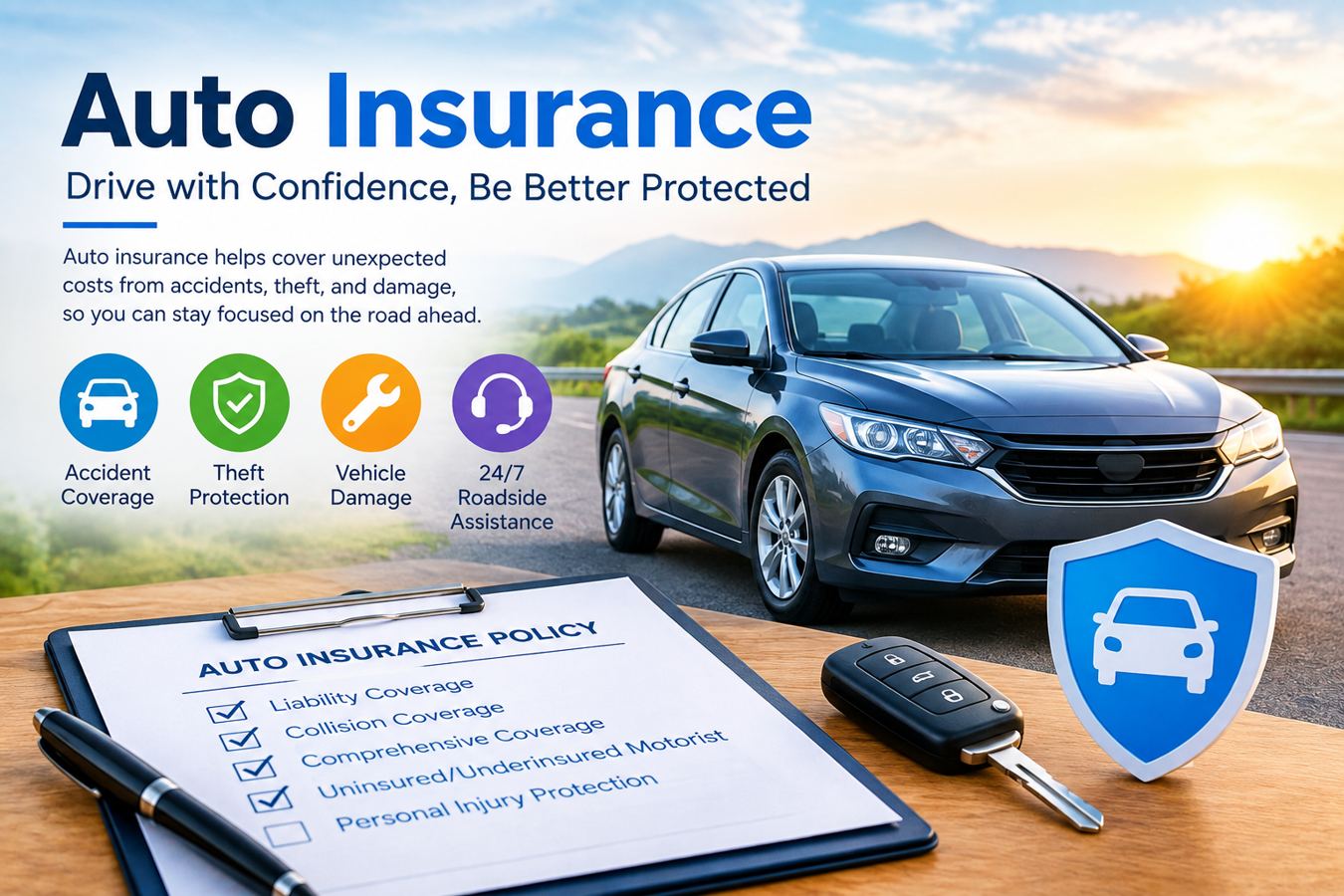
For many people, a car is more than a way to travel. It may be an important part of daily work, family life, business, and personal independence. At the same time, owning a vehicle comes with financial risks. Accidents, theft, weather-related damage, and unexpected repairs can create expenses that are difficult to manage. **Auto insurance** is designed to help vehicle owners manage some of these risks according to the terms of their policy.
Auto insurance works by transferring certain financial risks to an insurance company. In exchange for a premium, the insurer may provide coverage for specific losses, damages, or liabilities described in the policy. The exact protection depends on the policy, insurer, location, and selected coverage.
1. What Is Auto Insurance?
Auto insurance is a contract that provides financial protection for covered vehicle-related risks. Depending on the policy, it may help pay for damage to a vehicle, injuries or property damage caused to other people, theft, or certain other losses.
Not every auto insurance policy provides the same protection. Some policies focus mainly on liability, while others can include protection for the insured vehicle itself.
This is why drivers should read the policy carefully rather than assuming that every type of accident or damage will automatically be covered.
2. Liability Coverage
Liability coverage is an important part of many auto insurance policies. It is designed to address certain costs when the insured driver is legally responsible for causing injury to another person or damage to another person’s property.
For example, if a driver causes an accident that damages another vehicle, liability coverage may help with eligible costs according to the policy limits and applicable laws.
The required amount of liability coverage can vary depending on the country or region, so drivers should understand the legal requirements where they live.
3. Collision Coverage
Collision coverage is generally designed to help with damage to the insured vehicle resulting from a covered collision.
A collision could involve another vehicle, an object, or another covered situation. The policy may pay for eligible repair costs after the applicable deductible, subject to the policy’s terms and limits.
Collision coverage can be particularly relevant for people who want protection for the value of their own vehicle rather than only protection against claims from other people.
4. Comprehensive Coverage
Comprehensive coverage generally addresses certain types of vehicle damage that are not caused by a collision.
Depending on the policy, examples may include theft, vandalism, falling objects, fire, or certain weather-related events.
However, the exact list of covered events varies by policy. Drivers should always check the policy documents to understand which risks are included and which are excluded.
4. Understanding the Deductible
A deductible is an amount the policyholder may have to pay toward a covered loss before the insurer pays its portion.
For example, if a covered repair costs $2,000 and the applicable deductible is $500, the policyholder may be responsible for the first $500, with the insurer paying the eligible remaining amount according to the policy.
The relationship between deductibles and premiums is important when comparing policies. A lower premium may come with a higher deductible, while another policy may have a higher premium and a lower deductible.
5. What Can Affect Auto Insurance Costs?
Auto insurance premiums can depend on several factors. These may include the vehicle, location, driving history, coverage selected, deductible, claims history, and other information used by the insurer.
The type and value of a vehicle can also influence the cost because repair or replacement expenses can differ considerably between vehicles.
For this reason, drivers should compare policies based on both price and protection rather than choosing an insurance policy solely because it has the lowest premium.
6. How to Choose Auto Insurance
Before purchasing auto insurance, think about the risks you want to protect against and the financial loss you could comfortably handle yourself.
Compare important features such as
* Liability limits
* Collision coverage
* Comprehensive coverage
* Deductible amounts
* Exclusions
* Vehicle repair conditions
* Theft protection
* Optional roadside assistance
* Claim procedures
* Policy renewal terms
It is also important to provide accurate information when applying for coverage. Incorrect information about the vehicle, driver, usage, or other relevant details could create problems during the claims process.
7. What to Do After an Accident
If an accident occurs, safety should come first. Move to a safe location when possible, contact the appropriate emergency services if necessary, and exchange relevant information with the other parties.
Depending on the situation, photographs of the vehicles, road conditions, and visible damage may also be useful. The insurance company should then be contacted according to the policy’s claim instructions.
Avoid making assumptions about coverage before the insurer reviews the claim. The final decision depends on the policy terms, evidence, applicable rules, and circumstances of the incident.
8. Review Your Policy Regularly
Your insurance needs can change over time. Buying a new vehicle, changing where you live, using your car for a different purpose, adding another driver, or significantly changing your driving habits may affect your coverage needs.
Reviewing your policy periodically can help ensure that the information and coverage still match your circumstances.
9. Final Thoughts
Auto insurance is an important tool for managing the financial risks associated with driving. It can help protect drivers from certain vehicle-related losses and liability costs, depending on the coverage selected.
The key is to understand what your policy actually covers. Before choosing a plan, compare premiums, deductibles, coverage limits, exclusions, and claim procedures. A little time spent understanding your policy can make a major difference when unexpected vehicle problems occur.
**Note:** Auto insurance laws, required coverage, prices, and policy conditions vary by country, region, and insurer. This article is for general educational purposes and does not replace an actual insurance policy or professional advice.